Measurement Technology for Energy Utilities
Energy utilities are facing new challenges due to changing energy supply requirements, the energy transition, and altered load profiles. A comprehensive overview of the grid is crucial for overcoming these challenges, but it requires the appropriate measurement technology.
Distribution Grids in Transition
Changes in distribution grids in recent years have been characterized by numerous external factors that have influenced both the traditional planning paradigm and electrical energy supply technologies. Requirements for more efficient grids are increasing, as is the feed-in of renewable energies. Additionally, the introduction of charging stations for electric vehicles and capacitive loads further strain the grid.
This transformation of the power grid has far-reaching effects on the energy industry:
- Reversal of load flow leading to feed-back into the grid
- Overloading of operating equipment
- Increase in voltage at the feed-in point
- Increase in energy overproduction
- Asymmetries, especially in the low-voltage grid
- Growing demand for energy storage solutions
- Strain on grids due to non-linear loads
Mastering Challenges with the Right Measurement Technology
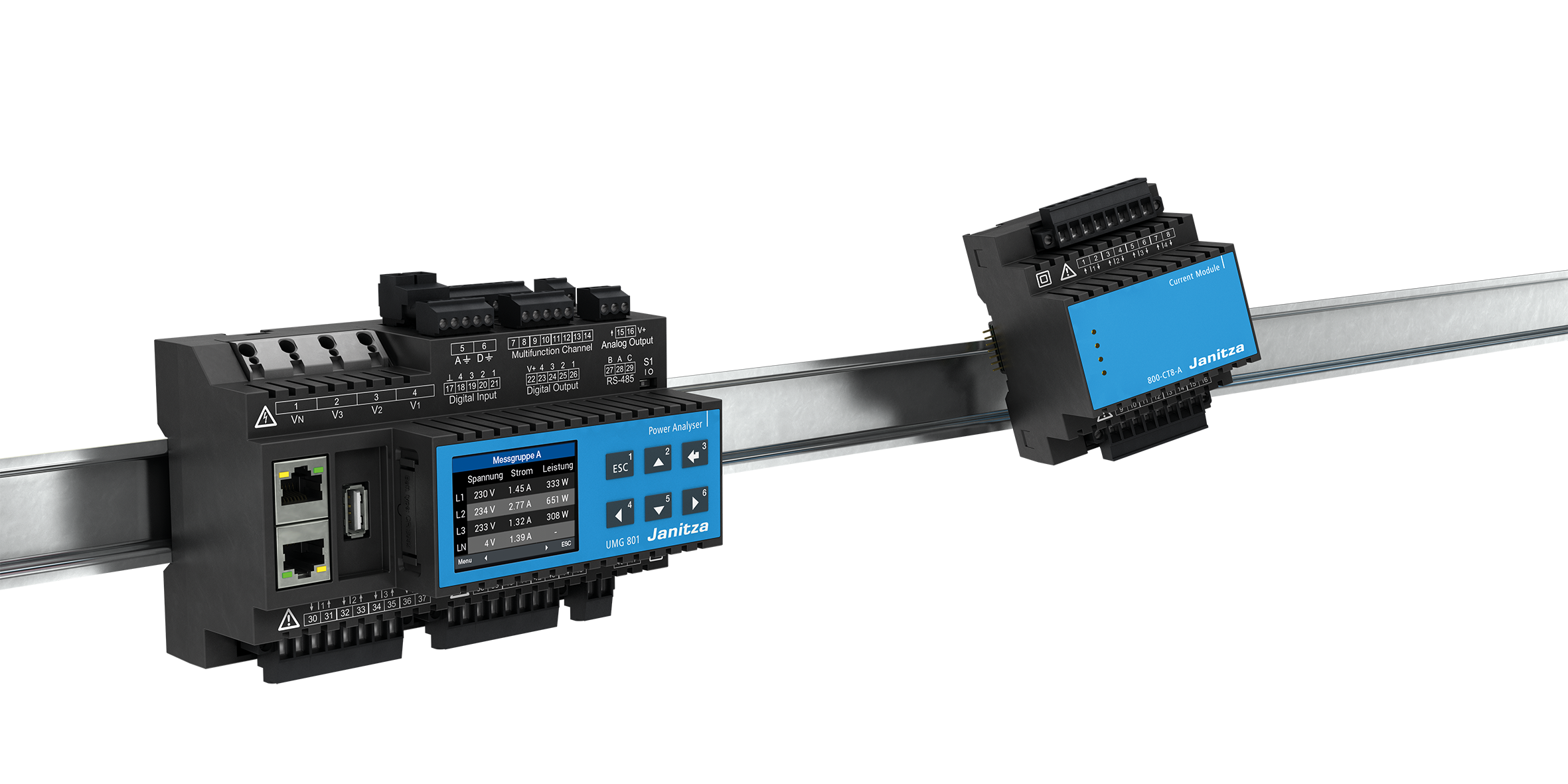
To successfully master the challenges and ensure a comprehensive overview of the grids, the acquisition of energy data at all levels is essential, especially in the context of implementing smart grids. It should be noted that intelligent energy distribution grids require more powerful measurement technology than conventional systems. Janitza/Optec offers a wide range of technically high-quality and scalable solutions that provide the right measurement solution for every requirement.
The acquisition of energy data at all levels offers numerous advantages, including:
- Faster fault analysis
- Solid foundation for grid planning
- Provision of data for automation and control systems
- Monitoring of power quality according to EN 50160
Retrofitting Local Grid Substations
Upgrading existing local grid substations is becoming increasingly common as they more frequently become intelligent nodes. They take on a variety of tasks, ranging from pure measurement to complete remote control and automation, as well as fault detection and power quality analysis. When selecting measurement technology for such upgrades, certain framework conditions must be observed.
Limited space: Additional monitoring and telecontrol systems must fit the limited expansion reserves of compact local grid substations.
Efficiency: Components should be easy to install via "plug-and-play" and cause minimal costs during operation.
Scalability: Solutions should allow for a cost-effective entry point and be easily expandable depending on needs and the desired resolution.