Predictive Grid Management and State Recognition in Complex Distribution Grids
Discover how PSIngo paves the way for predictive grid management. By intelligently linking live data and AI algorithms, distribution grid operators master the challenges of decentralization – efficiently and without massive expansion of sensor technology.
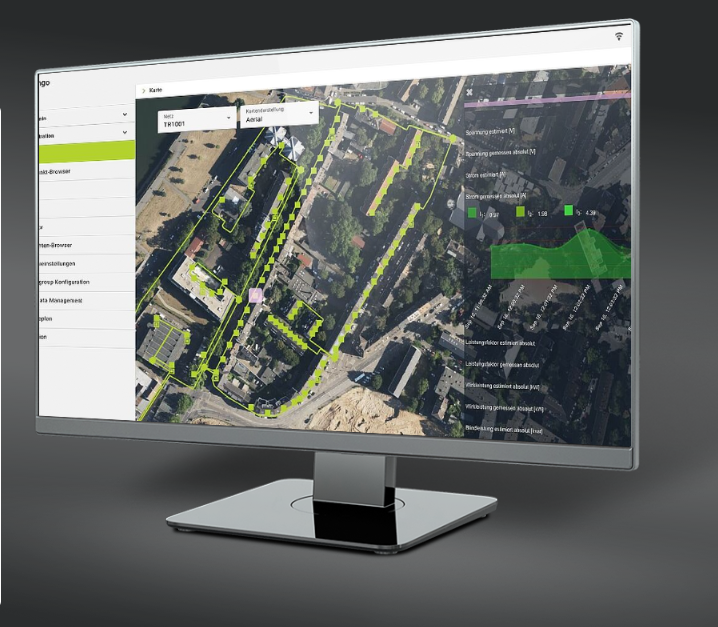
Increasing decentralization through renewable energies presents new challenges for the stability of our power grids. Traditional grid control systems, primarily designed for reactive control, are increasingly reaching their limits in today's complex energy landscape. The transition to predictive grid management is therefore inevitable for Swiss distribution system operators (DSOs).
From Reaction to Anticipation
Until now, operational management was often based on isolated measured values and empirical values. With the PSIngo platform, PSI offers a solution for data-driven state recognition that transforms operations from a reactive to an active mode. This allows bottlenecks to be identified before they arise.
Intelligent State Estimation Without Hardware Constraints
A decisive technological advantage is PSI's approach: instead of having to install new sensor technology or smart meters across the board, PSIngo links existing live data with historical data. Intelligent algorithms and artificial intelligence (AI) use this to calculate a precise grid state estimation.
Added Value for Grid Planners and Asset Managers
The advantages of this forward-looking way of working are diverse:
- Bottleneck Detection: Early identification of critical grid states.<
- Flexibility Management: Demand-oriented control of producers and loads for grid stabilization.
- Cost Efficiency: Optimal utilization of existing infrastructure without immediate billion-dollar investments in hardware.
For grid planners, asset managers, and operations managers, this means a significant increase in security of supply and a sound basis for decision-making regarding future grid expansion.
Visit PSI Software SE at Powertage 2026 to learn more about the digital transformation of grid management.