Large-Scale Battery Storage for Apartment Buildings: A Project in Schwyz Shows How It's Done
The energy transition isn't just happening in power plants; it starts right at our doorstep. A pilot project in Schwyz demonstrates how apartment buildings can become active grid participants using intelligent storage technology.

When Apartment Buildings Become Energy Hubs
Property managers face a dual challenge: rising demands for sustainable building technology and increasing pressure to optimize operating costs. The project on Rubiswilstrasse addresses both goals and goes even further.
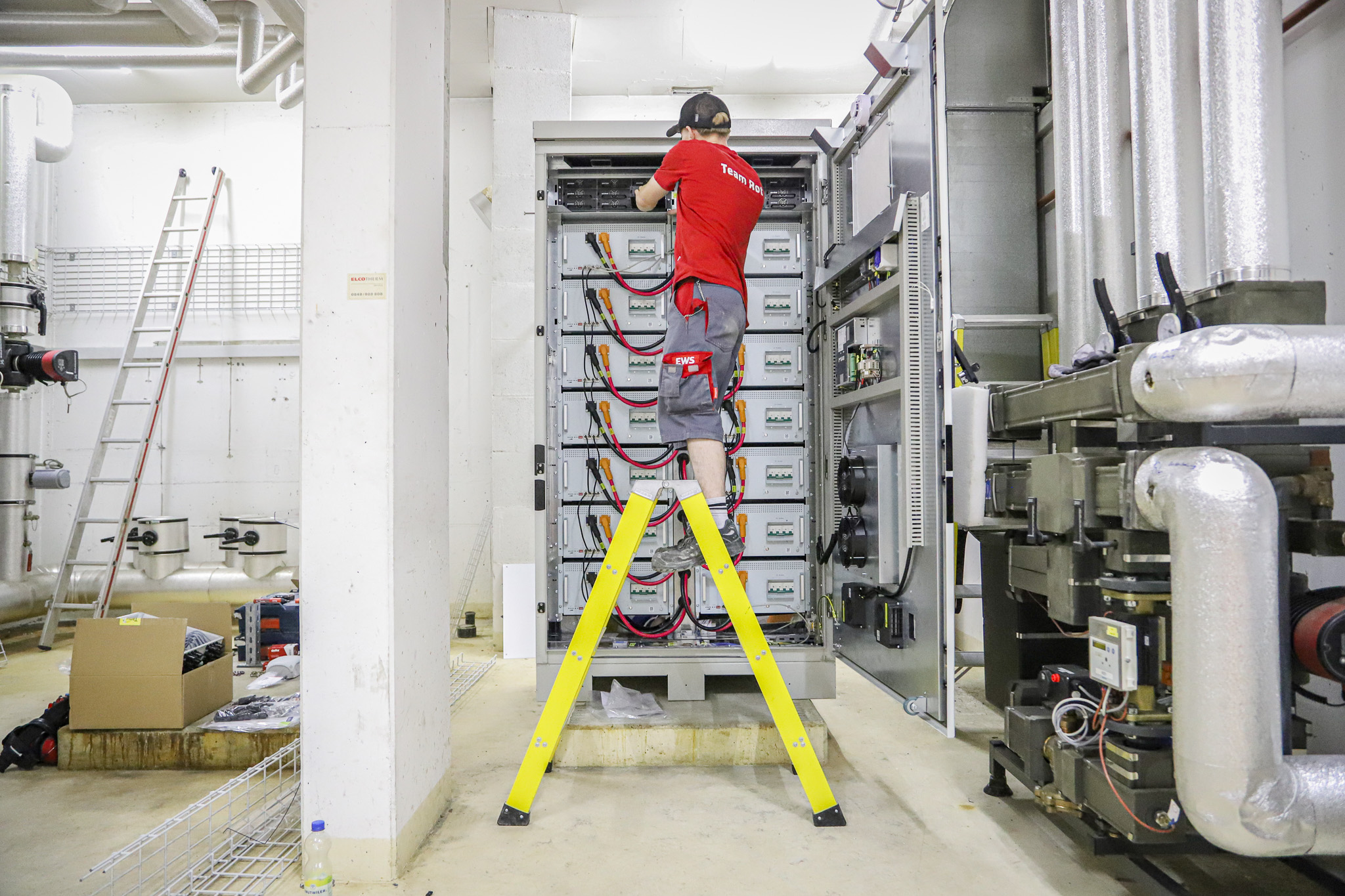
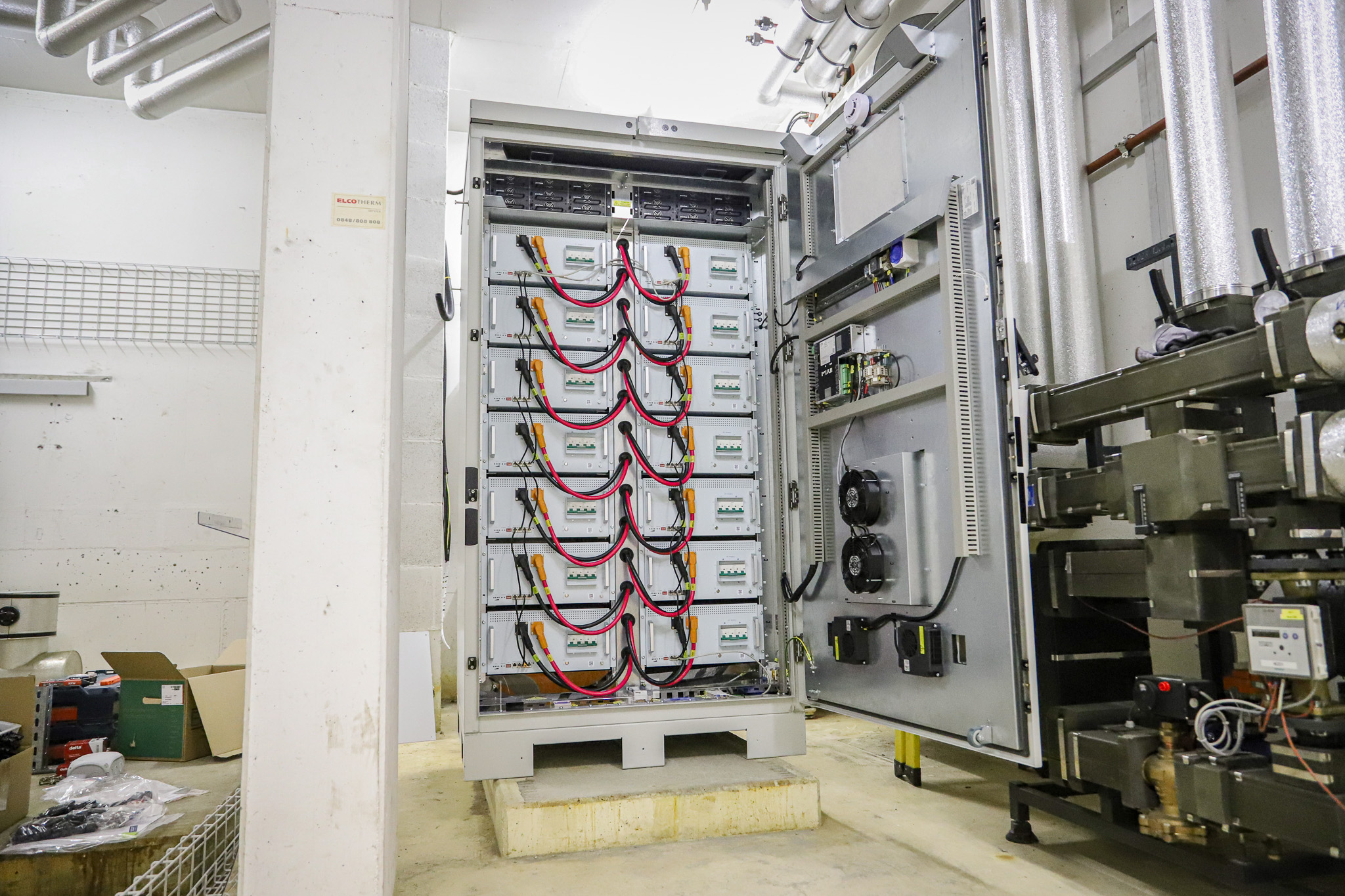
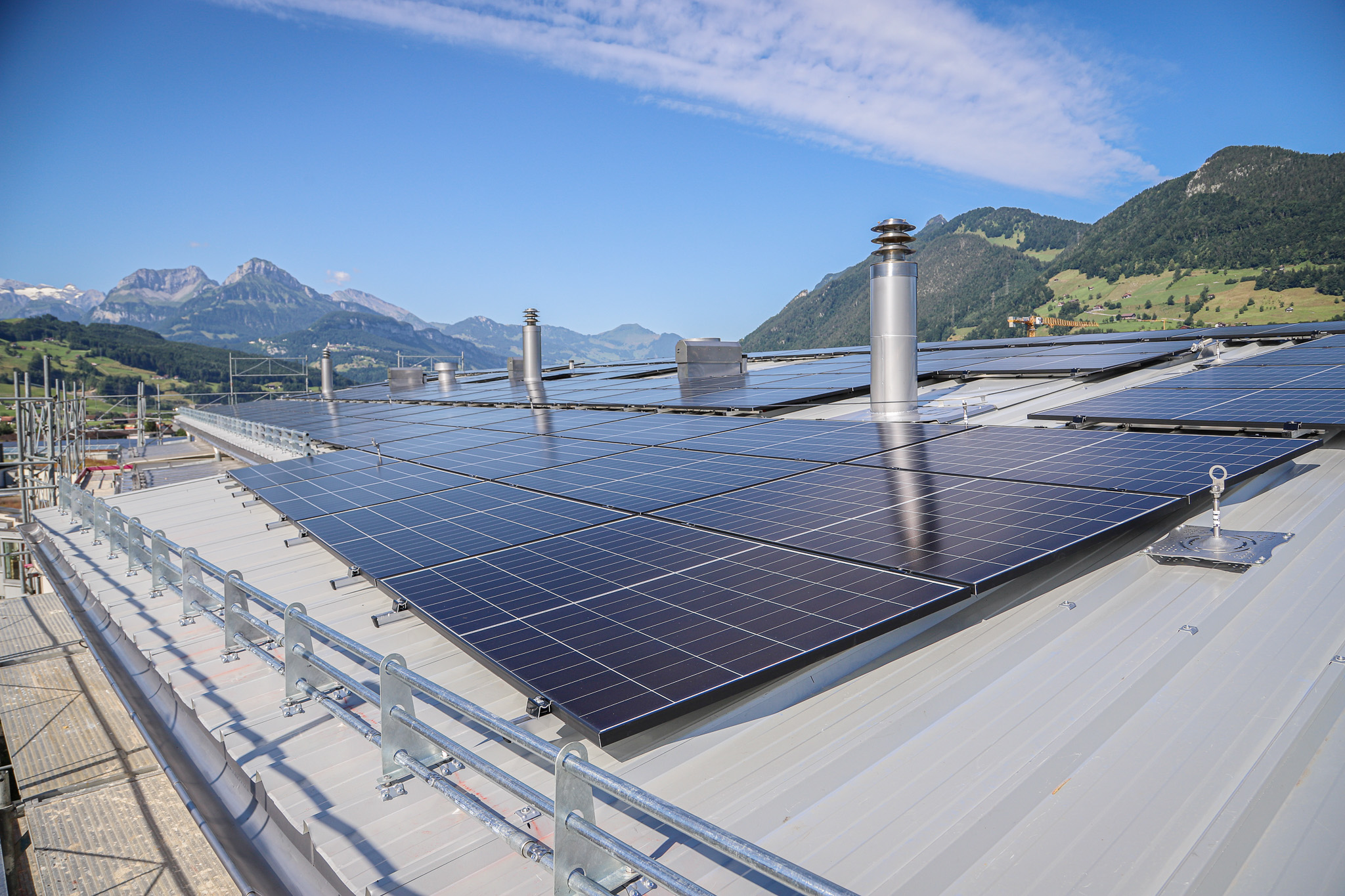
Photovoltaic systems with a nominal AC output of 50 kW each produce clean solar power on the apartment buildings. The highlight: a central battery storage system with a 200 kWh capacity stores excess energy and releases it when needed.
With a charging and discharging capacity of 60 kW, the system responds quickly to changing load requirements.
"We are not just creating a photovoltaic system with storage here. We have built a system that actively contributes to grid stability." – Tobias Mettler, Project Manager for Grid and Infrastructure Construction at EWS AG
Grid-Serving Storage: More Than Just Self-Consumption
Classic home storage systems optimize a property's self-consumption. The battery storage at Rubiswilstrasse can do more: while it optimizes self-consumption, it is also designed to feed energy back into the SwissGrid network. This grid-serving function makes the system an important component for frequency stabilization and control energy.
What does this mean specifically for property management?
- Reducing peak loads: The storage buffers consumption peaks, thereby lowering power costs.
- Optimizing self-consumption: Solar power is stored instead of being fed into the grid at low prices.
- Additional income: Providing control energy creates new revenue streams.
- Future-proofing: The system is designed for expansion and grows with requirements.
E-Mobility Included: Charging Infrastructure for the Underground Garage
The energy transition affects both building operations and the mobility of residents. Therefore, the project includes charging infrastructure for electric vehicles in the underground garage.
Technical Specifications of the E-Charging Infrastructure:
- 18 parking spaces with charging points
- Expandable as demand increases
- Integration into the property's overall energy system
The combination of solar systems, battery storage, and e-charging infrastructure also enables bidirectional charging in the future. In this concept, also known as V2G (Vehicle-to-Grid), electric vehicles can serve as mobile storage and feed energy back into the building or grid. This requires a special charging station, which was not installed in this specific project.
Project Overview: Facts at a Glance
| Component | Specification |
|---|---|
| PV System | 2 × 50 kW AC nominal output |
| Battery Storage | 200 kWh capacity |
| Charge/Discharge Power | 60 kW |
| E-Charging Spaces | Up to 18 (expandable) |
| Construction Period | May 2025 – October 2025 |
Bundled Expertise: How Team Red Works Together
A project of this complexity requires cooperation across various specialist areas. At EWS AG, internal departments work closely with external partners from planning to commissioning.
Internal Departments:
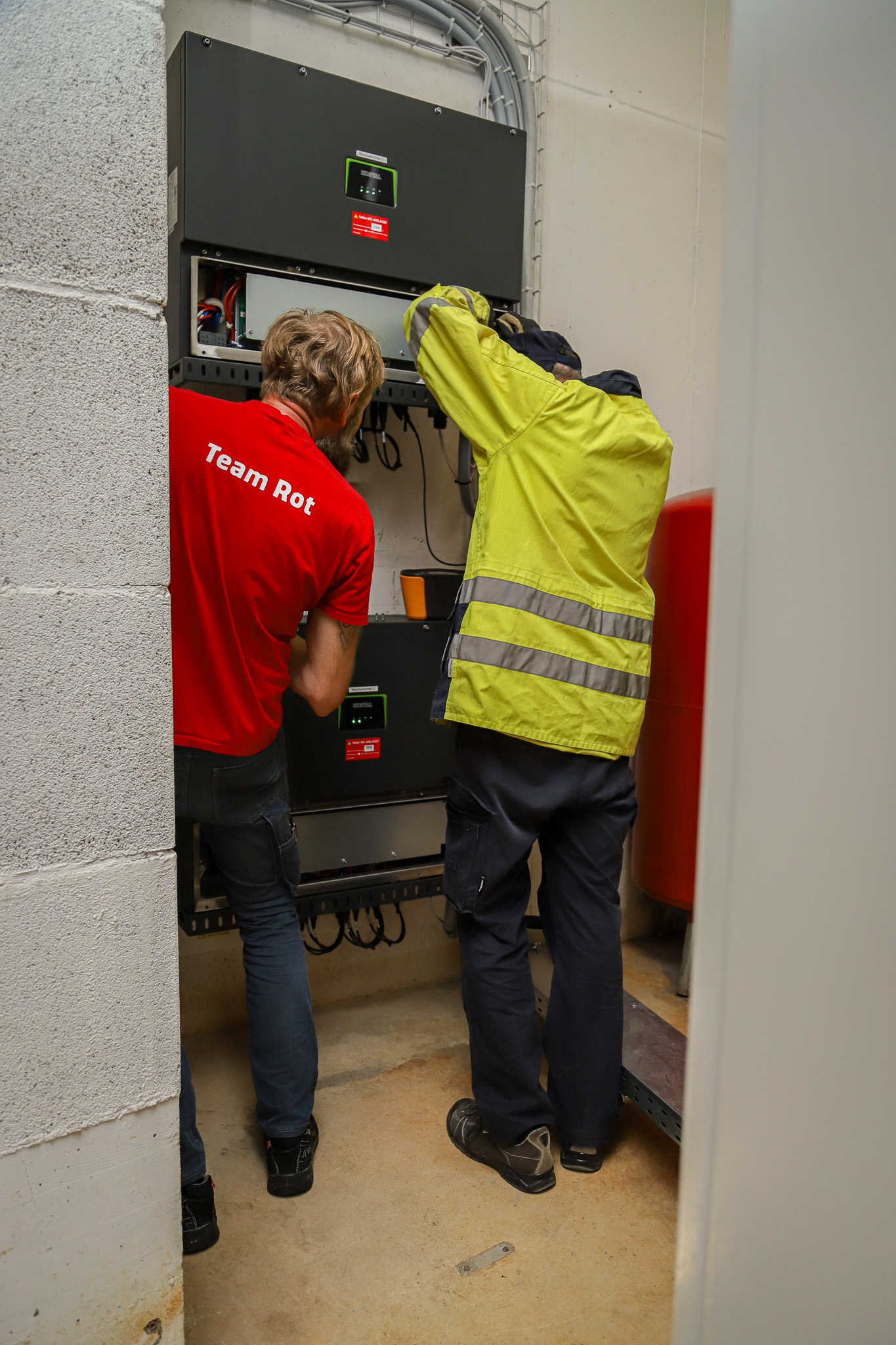
- Renewable Energies: Overall project management and coordination, PV system installation
- Elektro Ibach: Project management for electrical installation and e-mobility
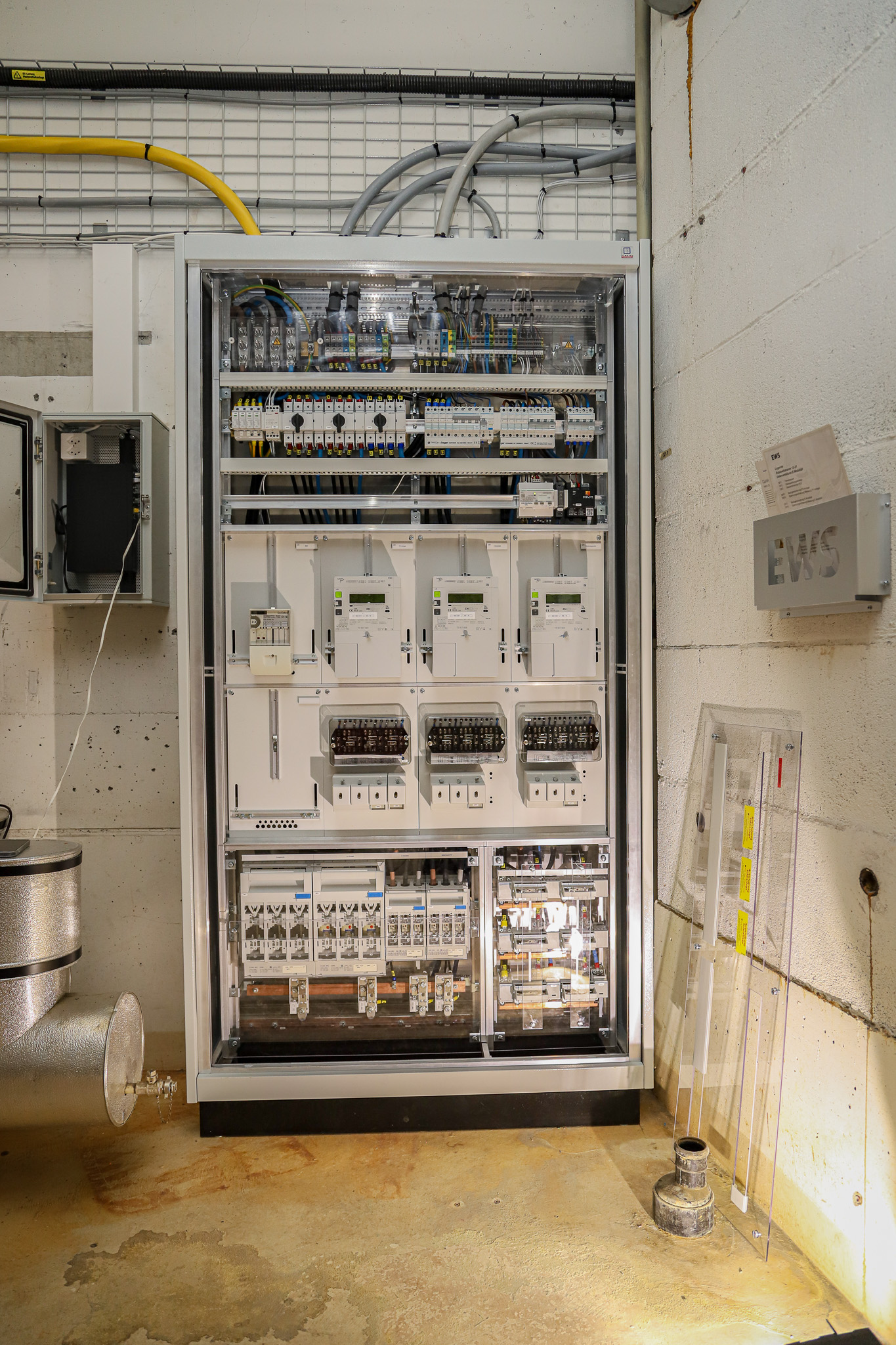
- Switchgear Construction: New construction of the sub-distribution for PV and e-mobility
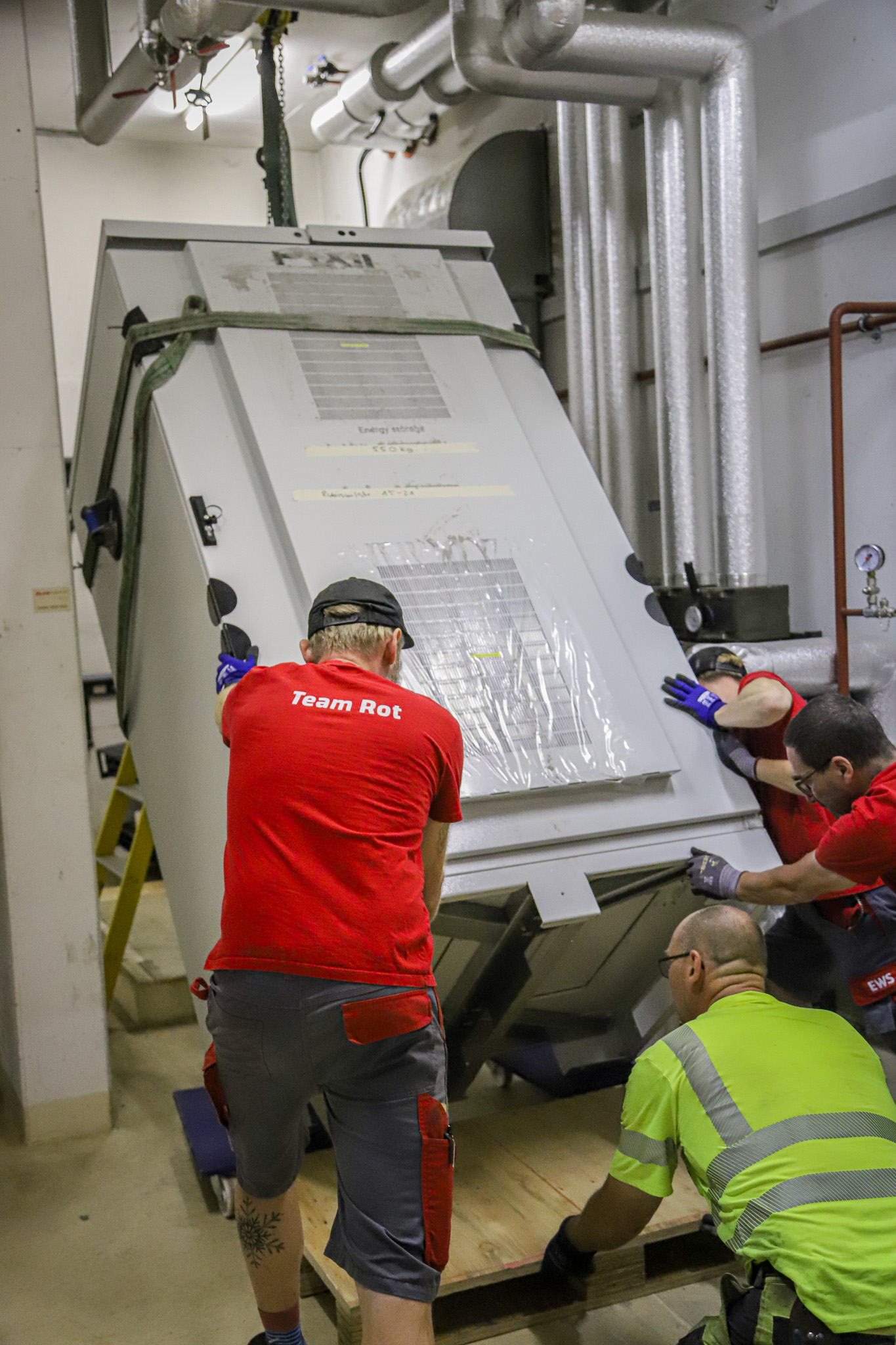
- Grid and Infrastructure Construction: Pulling and connecting supply cables, battery storage installation
External Partners:
- Holzbau Lüönd: Support with the installation of the PV system
- Nideröst Gärtnerei: Civil engineering work for cable routing
This interdisciplinary collaboration ensures that all components are perfectly synchronized. For property managers, this means: one contact person coordinating the entire project.
Why Battery Storage for Apartment Buildings Makes Sense Now
The need for flexibility in the Swiss electricity grid is continuously rising. With the expansion of renewable energies, power production fluctuates more than before. Battery storage units balance these fluctuations and create value on several levels.
For the Property:
- Higher share of self-consumption of self-produced electricity
- Independence from rising electricity prices
- Increase in property value through modern energy infrastructure
For the Residents:
- Cheaper electricity through self-production
- Charging options for electric vehicles
- Contribution to climate protection without loss of comfort
For the Power Grid:
- Relief during peak loads
- Contribution to frequency stabilization
- Support for the energy transition at a local level
Technology in Use: Lithium-Ion with LFP Technology
The battery storage used is based on lithium-ion technology with LFP cells (lithium iron phosphate). This technology offers decisive advantages for use in residential buildings.
Advantages of LFP Technology:
- High Safety: No fire hazard due to thermal instability
- Long Service Life: Over 6,000 charge cycles possible
- High Efficiency: Around 95 percent of the stored energy is available for use
- Sustainability: No rare earths like cobalt required
The modular design of the storage also allows for later scaling. Should the energy demand of the property increase, the storage capacity can be expanded.
The Path to Your Own Storage Project
Do you manage apartment buildings and are interested in a similar solution? The project on Rubiswilstrasse shows that the technology is mature and economically viable. The key to success is careful planning that harmonizes all components.
Typical Steps Toward Battery Storage:
- Needs Analysis: How high is the electricity consumption? Is there already a photovoltaic system?
- Feasibility Study: What storage size makes sense? What connection power is possible?
- Economic Calculation: How quickly will the investment pay for itself?
- Planning and Permits: What permits are required?
- Implementation: Installation by experienced specialists
- Operation and Maintenance: Long-term support for optimal performance
Conclusion: Battery Storage in Apartment Buildings Makes Sense Threefold
The project on Rubiswilstrasse is an example of how properties can become active participants in the energy transition. The combination of photovoltaics, battery storage, and e-charging infrastructure creates a system that is both ecologically and economically convincing.
Property managers have the opportunity to future-proof their buildings while contributing to grid stability. The technology is here, the economics are right. Now it's about implementation.